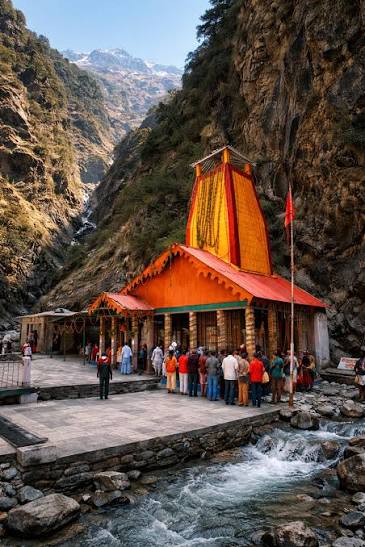
Yamunotri temple beside the Surya Kund hot spring in the Garhwal Himalayas

GoTrek Travels

Char Dham Yatra

A complete guide to Yamunotri, Gangotri, Kedarnath, and Badrinath — route, itinerary, best time to travel, and everything else you need to plan your yatra.

Overview

Char Dham literally means "four abodes." Each shrine is dedicated to a different deity and sits at a different elevation in the Garhwal Himalayas, in Uttarakhand. Pilgrims typically travel the circuit by road, combining short treks or pony/palki rides for the two temples not directly connected by motorable roads — Yamunotri and Kedarnath. The portals of all four shrines are opened and closed on dates fixed annually by the respective temple committees, usually between late April/early May and October/November.

History & Origins of the Char Dham Yatra

The term "Char Dham" in its Himalayan sense (distinct from the all-India Char Dham of Puri, Rameswaram, Dwarka, and Badrinath) refers specifically to this four-shrine circuit within Uttarakhand, also called the Chota Char Dham to distinguish it from the pan-India pilgrimage. Devotion to these sites long predates organized tourism — local communities in Uttarkashi, Rudraprayag, and Chamoli districts have maintained ritual worship at these shrines for centuries, with several of the current temple structures traced to renovations by Garhwal kings, Gorkha commanders, and the royal family of Jaipur between the 18th and 19th centuries.

Adi Shankaracharya, the 8th-9th century philosopher credited with reviving several major pilgrimage sites across India, is closely associated with both Kedarnath and Badrinath — tradition holds he rediscovered the Badrinath idol and later attained samadhi at Kedarnath. Today the Char Dham Yatra draws lakhs of pilgrims each season, with the Uttarakhand government formalizing online registration and health screening in recent years to manage crowd volumes and improve safety along the routes.

The Four Dhams

Yamunotri temple beside the Surya Kund hot spring in the Garhwal Himalayas
1st Dham

Yamunotri

Deity
Goddess Yamuna
Elevation
3,293 m
District
Uttarkashi

The source of the Yamuna River, believed to be the sister of Yama, the god of death. Bathing in the hot springs of Surya Kund near the temple, followed by darshan, is said to protect devotees from an untimely death.

How to reach: Nearest road head is Janki Chatti (approx. 5 km trek/pony/palki to the temple). Motorable road connects Janki Chatti to Dehradun (~215 km) and Rishikesh (~190 km) via Barkot.

Highlights

  • Surya Kund hot water spring beside the temple
  • Divya Shila, a rock pillar worshipped before entering the temple
  • Rice cooked in the hot spring, taken home as prasad

More About Yamunotri

Trek Distance

~5 km (Janki Chatti to temple)

Trek Difficulty

Easy-moderate; pony/palki/doli available

Nearest Railway

Rishikesh (~210 km from temple base)

Nearest Airport

Jolly Grant, Dehradun (~220 km)

Portal Open/Close

Akshaya Tritiya (Apr/May) to Yama Dwitiya (Oct/Nov)

Ideal Duration

1-2 days from Barkot

Temple Architecture

Small stone shrine rebuilt in the 19th century by Maharani Gularia of Jaipur; original temple destroyed by an earlier avalanche.

Legend

Sage Asit Muni is said to have bathed daily in both the Ganga and Yamuna. In old age, unable to travel to the Ganga, a stream is believed to have appeared beside his ashram at Yamunotri — considered a manifestation of the Ganga itself, still visible as a small spring near the temple.

Know More about Yamunotri
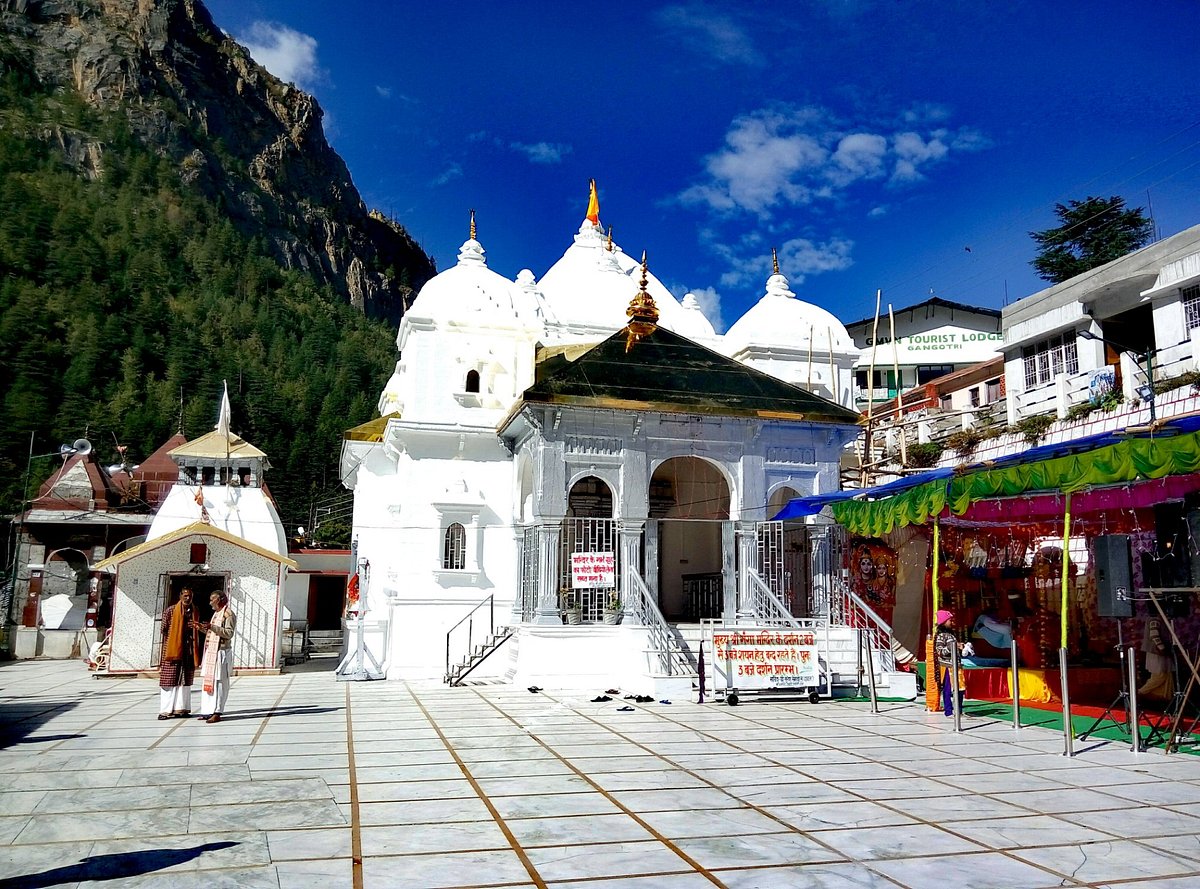
Gangotri temple on the banks of the Bhagirathi river
2nd Dham

Gangotri

Deity
Goddess Ganga
Elevation
3,100 m
District
Uttarkashi

Marks the point where the Ganga is believed to have descended to earth. The actual source, Gaumukh, lies about 18 km further via a trek. The temple was built by Gorkha commander Amar Singh Thapa in the early 19th century.

How to reach: Directly motorable — temple is located in Gangotri town, about 100 km from Uttarkashi and 250 km from Rishikesh.

Highlights

  • Gaumukh glacier trek (optional, 2 days round trip)
  • Submerged Shivling rock visible only in winter when water levels drop
  • Pandava Gufa, a cave associated with the Pandavas

More About Gangotri

Trek Distance

Temple is roadside; Gaumukh extension is ~18 km one-way

Trek Difficulty

Temple: none. Gaumukh trek: moderate, permit required

Nearest Railway

Rishikesh (~250 km)

Nearest Airport

Jolly Grant, Dehradun (~260 km)

Portal Open/Close

Akshaya Tritiya (Apr/May) to Diwali (Oct/Nov)

Ideal Duration

1 day for temple; add 2 days for Gaumukh trek

Temple Architecture

White granite structure built in the early 1800s by Gorkha general Amar Singh Thapa; renovated by the Kingdom of Jaipur.

Legend

King Bhagirath is said to have performed severe penance to bring the Ganga down from the heavens to liberate the souls of his ancestors. Shiva agreed to break the river's fall by catching it in his matted hair, releasing it gently onto the earth — the origin of the name Gaumukh ("cow's mouth"), the glacier snout from which the river emerges.

Know More about Gangotri
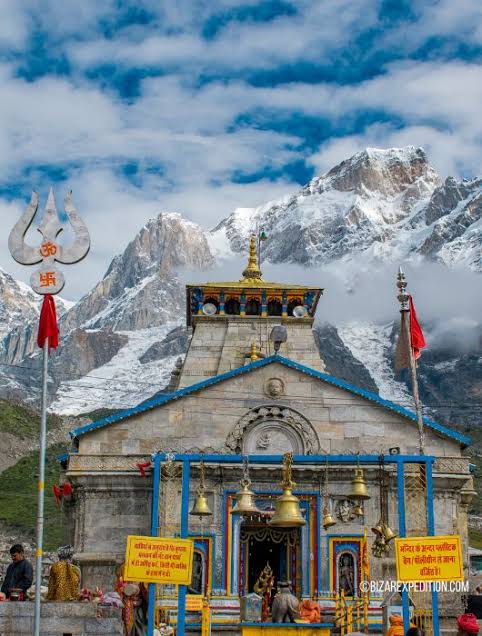
Kedarnath temple against the snow-capped Kedarnath massif
3rd Dham

Kedarnath

Deity
Lord Shiva (Jyotirlinga)
Elevation
3,583 m
District
Rudraprayag

One of the twelve Jyotirlingas and part of the Panch Kedar group. According to legend, the Pandavas built the original temple after seeking Shiva's forgiveness following the Kurukshetra war.

How to reach: Motorable road up to Gaurikund/Sonprayag, followed by a 16-18 km trek, pony, palki, or helicopter to the temple.

Highlights

  • Adi Shankaracharya's samadhi located behind the temple
  • Helicopter services available from Phata, Sersi, and Guptkashi
  • Vasuki Tal, a high-altitude lake reachable via a side trek

More About Kedarnath

Trek Distance

~16-18 km (Gaurikund/Sonprayag to temple)

Trek Difficulty

Moderate-strenuous; pony, palki, and helicopter options available

Nearest Railway

Rishikesh (~215 km from Sonprayag)

Nearest Airport

Jolly Grant, Dehradun (~225 km from Sonprayag)

Portal Open/Close

Akshaya Tritiya (Apr/May) to Bhai Dooj (Oct/Nov)

Ideal Duration

2 days including trek up and down

Temple Architecture

12th-century stone temple built in North Indian Nagara style; survived the 2013 flash floods largely intact.

Legend

After the Kurukshetra war, the Pandavas sought Shiva's forgiveness for the bloodshed. Shiva evaded them by taking the form of a bull and diving underground; when Bhima caught hold of him, the bull is said to have split apart, leaving its hump at Kedarnath. Other body parts are worshipped at four other Panch Kedar shrines nearby.

Know More about Kedarnath
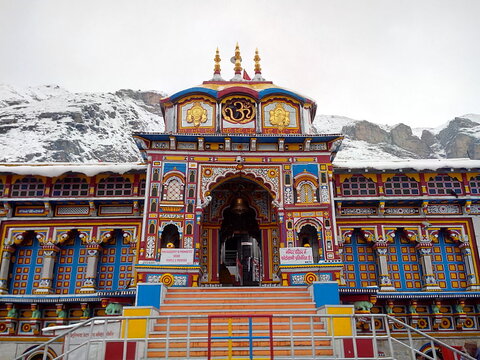
Badrinath temple with Neelkanth peak rising behind it
4th Dham

Badrinath

Deity
Lord Vishnu (as Badrinarayan)
Elevation
3,133 m
District
Chamoli

One of the Char Dhams and also part of the 108 Divya Desams of Vaishnavism. The temple sits on the banks of the Alaknanda River, flanked by the Nar and Narayan mountain ranges, with Neelkanth peak visible behind it.

How to reach: Fully motorable — temple town is well connected by road, about 300 km from Rishikesh via Joshimath.

Highlights

  • Tapt Kund hot spring at the base of the temple steps
  • Mana village, the last Indian village before the Tibet border
  • Vyas Gufa and Bhim Pul near Mana

More About Badrinath

Trek Distance

None — fully motorable to the temple

Trek Difficulty

N/A; short walk from parking to temple steps

Nearest Railway

Rishikesh (~295 km)

Nearest Airport

Jolly Grant, Dehradun (~315 km)

Portal Open/Close

Akshaya Tritiya (Apr/May) to mid-Nov (dates fixed by temple committee)

Ideal Duration

1-2 days including Mana village

Temple Architecture

Colorful conical-roofed shrine rebuilt multiple times after glacial/avalanche damage; current structure largely dates to Garhwal kings and later Jaipur-era renovation.

Legend

Legend holds that Lord Vishnu meditated here for ages, and Goddess Lakshmi shielded him from the harsh weather by turning into a badri (jujube/berry) tree — giving the site its name, Badrinath, or "lord of the berry tree." The idol is believed to have been rediscovered by Adi Shankaracharya in the 8th-9th century, having been hidden in the Narad Kund.

Know More about Badrinath

Sample 9-Day Itinerary

  1. Day 1

    Haridwar / Dehradun to Barkot

    Arrival and drive to Barkot (~215 km, 7-8 hrs) via Mussoorie/Chamba. Overnight stay in Barkot.

  2. Day 2

    Barkot to Yamunotri to Barkot

    Drive to Janki Chatti, trek/pony to Yamunotri temple, darshan, return trek and drive back to Barkot.

  3. Day 3

    Barkot to Uttarkashi

    Drive to Uttarkashi (~100 km, 4 hrs), visit Vishwanath Temple. Overnight stay.

  4. Day 4

    Uttarkashi to Gangotri to Uttarkashi

    Drive to Gangotri (~100 km), temple darshan, optional visit to the riverbank ghats, return to Uttarkashi.

  5. Day 5

    Uttarkashi to Guptkashi

    Long drive to Guptkashi (~220 km, 8-9 hrs) via Rudraprayag. Overnight stay.

  6. Day 6

    Guptkashi to Kedarnath

    Drive to Sonprayag/Gaurikund, trek (or helicopter) to Kedarnath, temple darshan, overnight stay near the shrine.

  7. Day 7

    Kedarnath to Pipalkoti

    Early darshan, trek/helicopter back to Gaurikund, drive to Pipalkoti (~180 km) via Rudraprayag. Overnight stay.

  8. Day 8

    Pipalkoti to Badrinath to Joshimath

    Drive to Badrinath (~70 km), temple darshan, visit Mana village, drive back to Joshimath for overnight stay.

  9. Day 9

    Joshimath to Rishikesh / Haridwar

    Return drive (~275 km, 9-10 hrs) to Rishikesh or Haridwar. Tour concludes.

Itinerary can be shortened by using helicopter services for Kedarnath, or extended with additional acclimatization/rest days, especially for elderly travelers or large groups.

Best Time to Visit

PeriodNotes
May - JunePleasant weather, all four dhams accessible. Peak season with the heaviest crowds.
July - AugustMonsoon season. Landslide-prone stretches, especially Gangotri and Kedarnath routes. Travel with caution and buffer days.
September - October (up to Diwali)Clear skies, thinner crowds, good visibility. Considered the best window after the peak season.
November - AprilPortals close for winter (typically late Oct/early Nov, dates fixed each year by temple committees). Yatra not operational.

Distances Between Stops

FromToDistanceDrive Time
Haridwar / RishikeshBarkot (Yamunotri base)~215 km7-8 hrs
BarkotUttarkashi (Gangotri base)~100 km3-4 hrs
UttarkashiGuptkashi (Kedarnath base)~220 km8-9 hrs
GuptkashiBadrinath~200 km7-8 hrs
BadrinathRishikesh / Haridwar~295 km9-10 hrs

Drive times are approximate and can vary significantly with weather, road repair work (common after the monsoon), and traffic during peak season.

What to Pack

Heavy woollens, thermals, and a windproof/waterproof jacket — temperatures can drop near freezing even in May-June
Comfortable, broken-in trekking shoes with good grip for Yamunotri and Kedarnath treks
Rain poncho or umbrella, especially for July-September travel
Walking stick or trekking pole for the Kedarnath and Yamunotri routes
Personal medication, a basic first-aid kit, and any doctor-prescribed altitude sickness medicine
Sunscreen, sunglasses, and a cap — UV exposure is high at altitude
Power bank, as charging points are limited near the shrines
Photocopies of ID proof and the Char Dham registration confirmation

Health & Altitude Tips

  • Kedarnath (3,583 m) and Yamunotri (3,293 m) both carry a real risk of Acute Mountain Sickness (AMS). Ascend gradually and avoid overexertion on the first day.
  • Stay well hydrated and avoid alcohol or heavy meals the night before a trek day.
  • Pilgrims with heart conditions, high blood pressure, or respiratory issues should carry a doctor's fitness certificate and consult before undertaking the Kedarnath or Yamunotri treks.
  • Elderly travelers or those unable to trek can use pony, palki (palanquin), doli, or helicopter services at Yamunotri and Kedarnath.
  • If experiencing headache, nausea, or breathlessness at altitude, stop ascending, rest, and inform your guide or trek leader immediately.

Registration & Permits

Every pilgrim must complete online Char Dham registration through the Uttarakhand Tourism Department before starting the yatra. This can be done via the official Uttarakhand Tourism website or the Tourist Care Uttarakhand mobile app. Carry a printed or digital copy of the registration confirmation along with a valid photo ID, as these are checked at multiple points along the route. GoTrek Travels handles registration on behalf of pilgrims as part of all Char Dham packages.

Frequently Asked Questions

What is the correct order to visit the Char Dham?

The traditional sequence is Yamunotri, Gangotri, Kedarnath, and Badrinath, moving from west to east across Uttarakhand. Most road itineraries follow this order to minimize backtracking.

Is registration mandatory for the Char Dham Yatra?

Yes. Online registration through the Uttarakhand Tourism portal or the Tourist Care Uttarakhand app is mandatory for all pilgrims before starting the yatra, along with a biometric health ID at designated checkpoints.

Can Kedarnath and Badrinath be done by helicopter?

Yes. Helicopter services operate for Kedarnath from Phata, Sersi, and Guptkashi. Badrinath is fully motorable and does not require a helicopter or trek.

How many days does the full Char Dham Yatra take?

A road-based yatra covering all four dhams typically takes 9-12 days depending on the starting point, weather, and rest days built in for high-altitude acclimatization.

What documents are required?

A valid government photo ID, the online Char Dham registration confirmation, and for elderly or high-risk travelers, a recent medical fitness certificate are recommended.

Plan Your Char Dham Yatra with GoTrek Travels

GoTrek Travels is a KMVN-approved operator based in Pithoragarh, Uttarakhand, offering guided Char Dham packages with transport, stay, and registration handled end to end.

#GoTrekExpeditions

Highlights From Our Journeys

Follow Live Updates
Adi Kailash Journey

Watch Reel

Adi Kailash Journey

Journey Memories

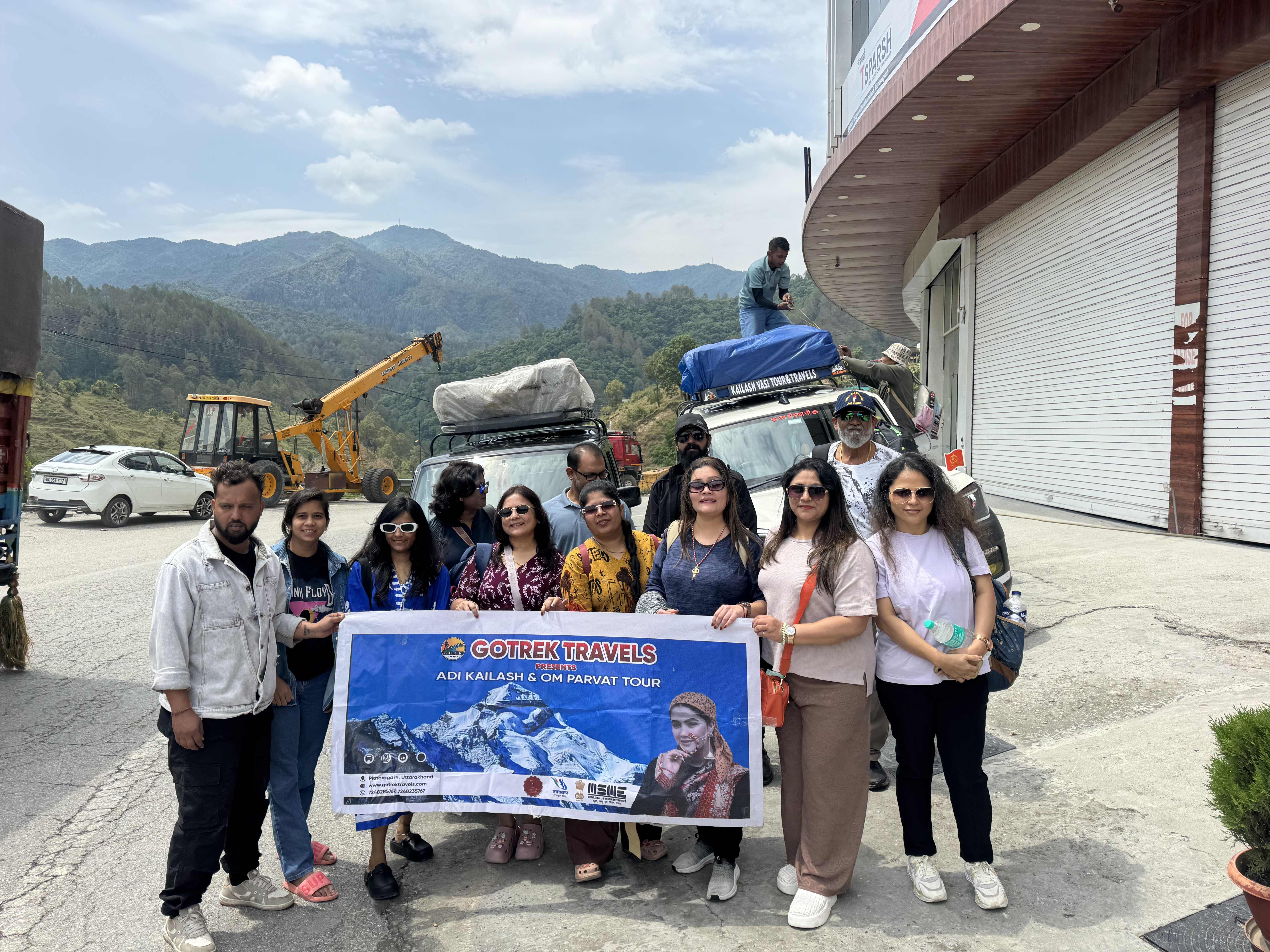
Our Previous Group Tour Pictures

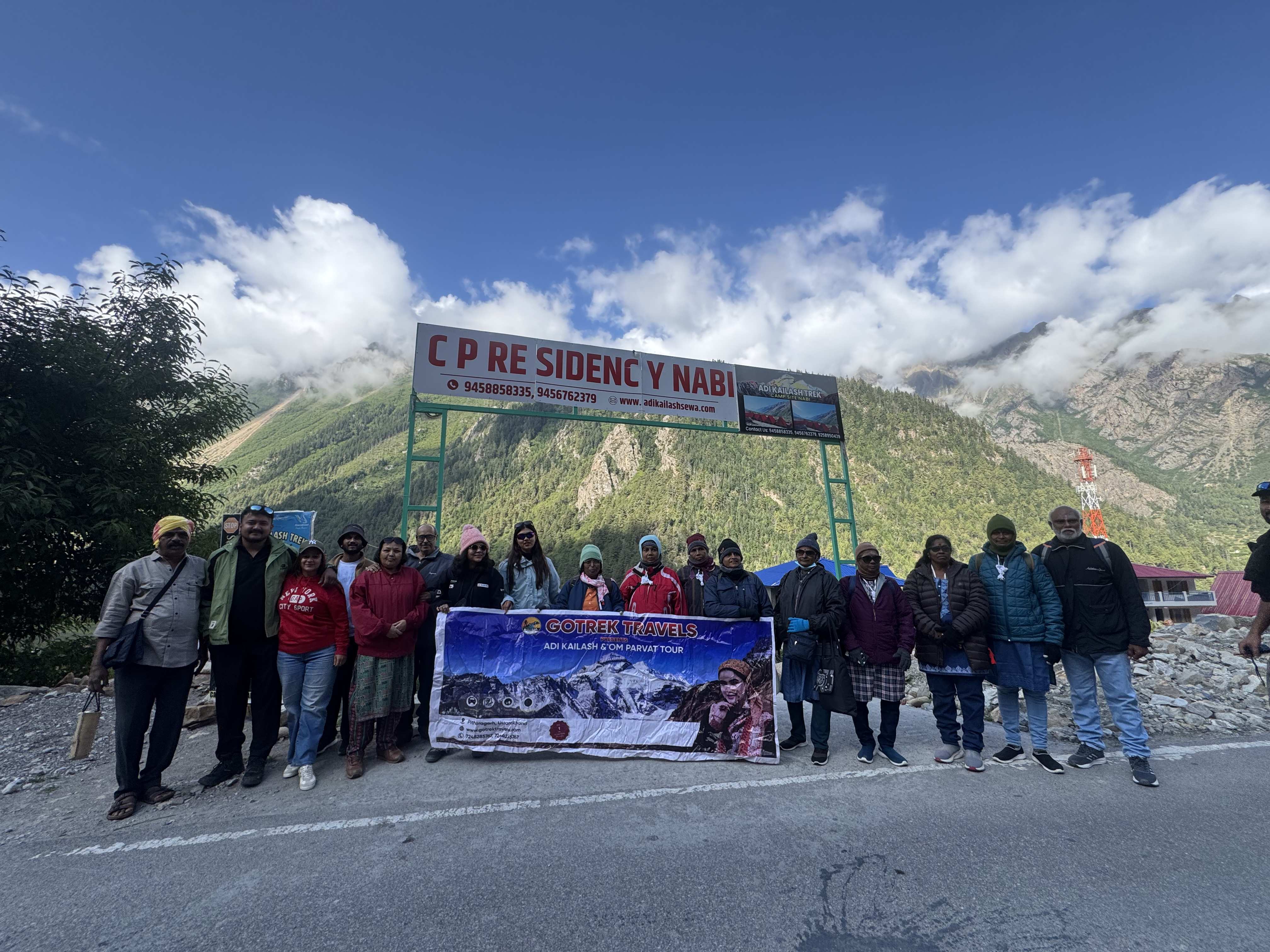
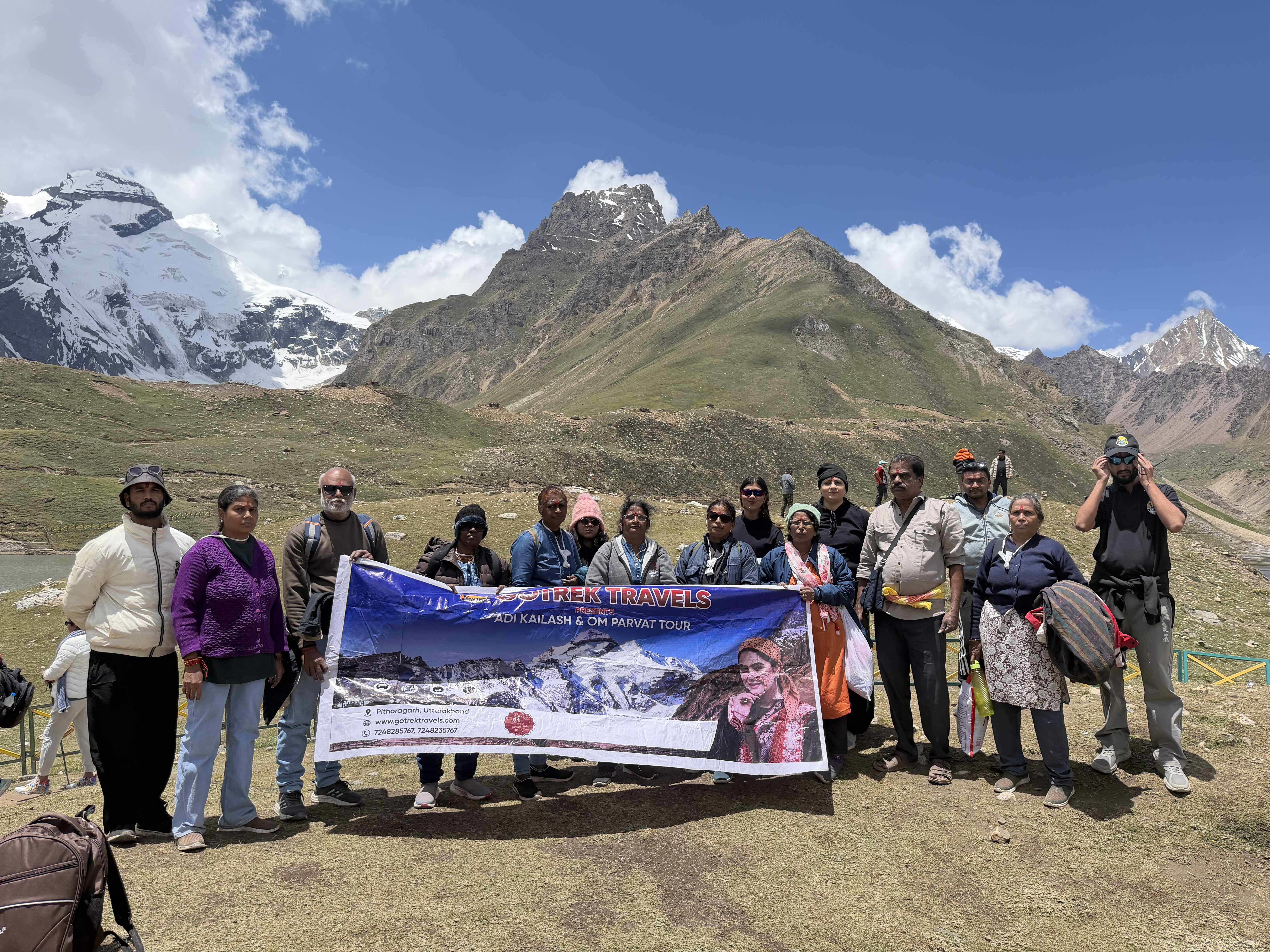
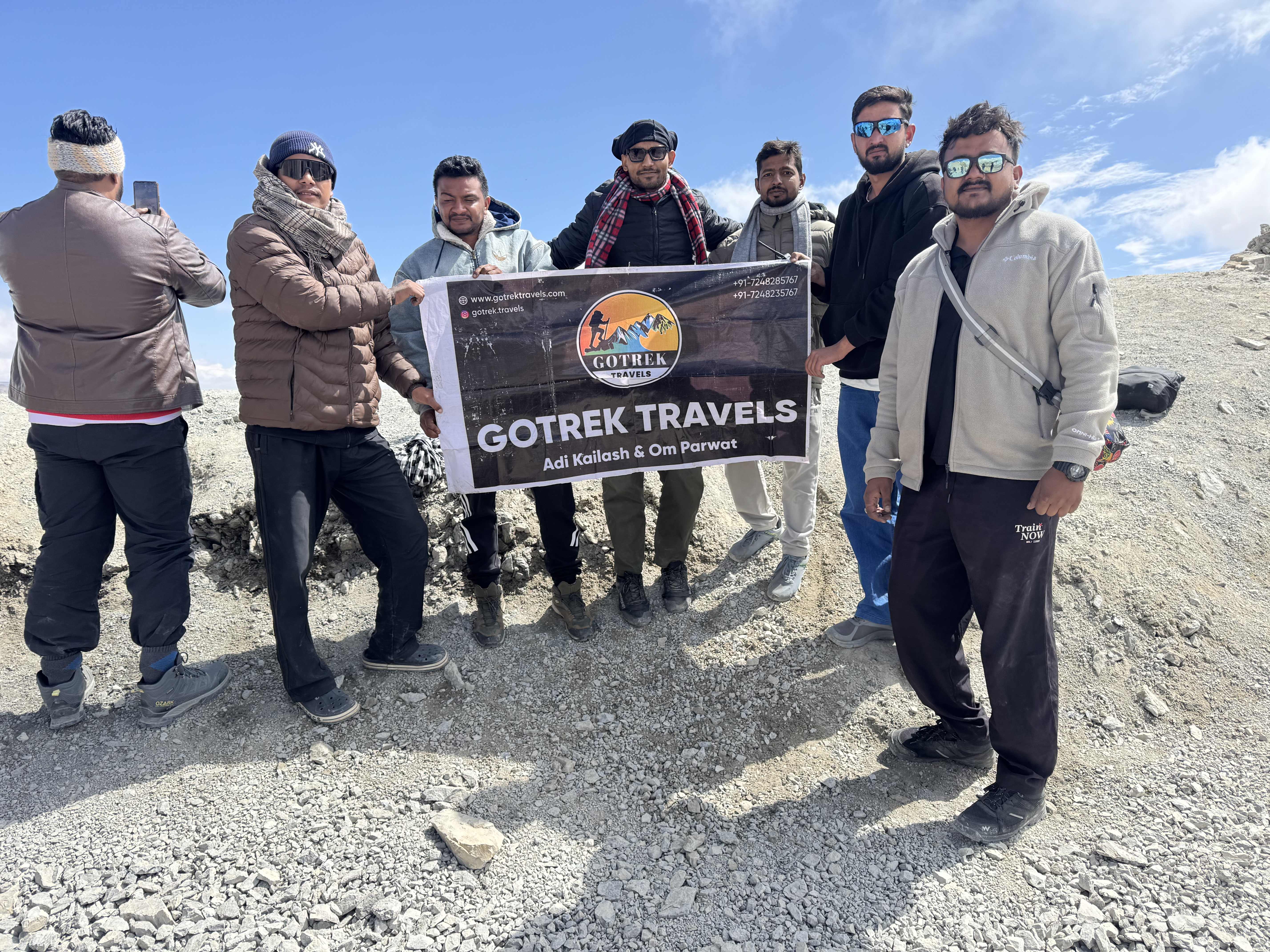
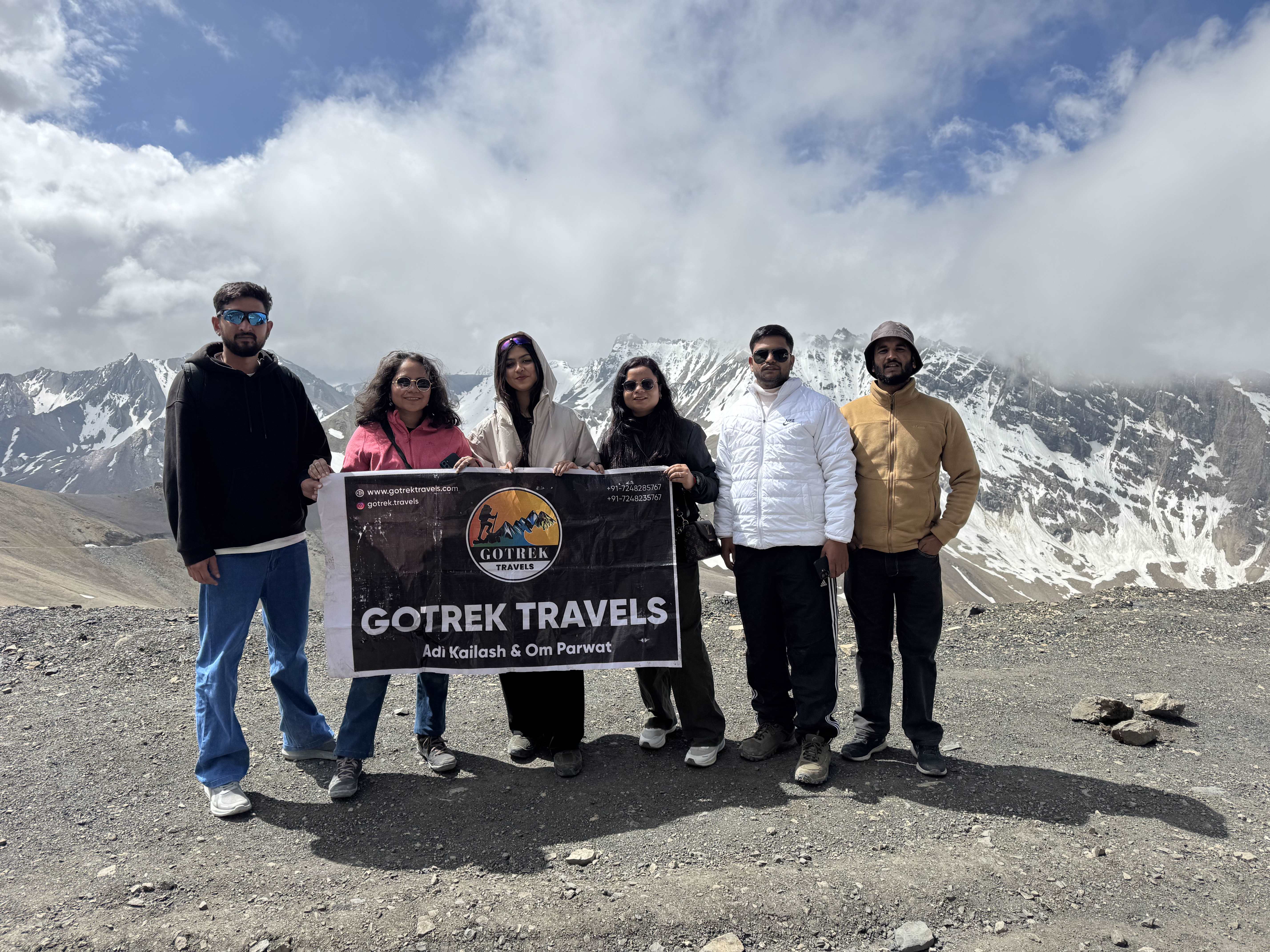
Memorable moments from real GoTrek group departures across mountains and spiritual destinations.

Group Memory 01 — GoTrek Travels group departure
Group Memory 01
Group Memory 02 — GoTrek Travels group departure
Group Memory 02
Group Memory 03 — GoTrek Travels group departure
Group Memory 03
Group Memory 04 — GoTrek Travels group departure
Group Memory 04
Group Memory 05 — GoTrek Travels group departure
Group Memory 05
Group Memory 06 — GoTrek Travels group departure
Group Memory 06
Group Memory 07 — GoTrek Travels group departure
Group Memory 07
Group Memory 08 — GoTrek Travels group departure
Group Memory 08
Group Memory 09 — GoTrek Travels group departure
Group Memory 09
Group Memory 10 — GoTrek Travels group departure
Group Memory 10
Group Memory 11 — GoTrek Travels group departure
Group Memory 11
Group Memory 12 — GoTrek Travels group departure
Group Memory 12
Group Memory 13 — GoTrek Travels group departure
Group Memory 13

Our Recognitions & Partners

Recognized by trusted institutions and partnered with leading travel platforms to deliver safe, reliable pilgrimage journeys.

Uttarakhand Tourism — GoTrek Travels accreditation

Uttarakhand Tourism

UTTR/PITHORAGARH/04-2026/450066Recognized
MSME India — GoTrek Travels accreditation

MSME India

UDYAM-UK-09-0011014Govt. Regd
Nidhi Portal — GoTrek Travels accreditation

Nidhi Portal

EUK000366Verified
Tripadvisor — GoTrek Travels accreditation

Tripadvisor

Traveller's ChoiceView Profile
GST Verified — GoTrek Travels accreditation

GST Verified

05CEQPB8319P1ZXActive
Chat with us