4th Dham
Badrinath
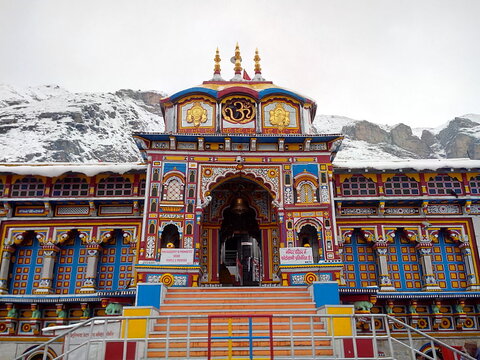
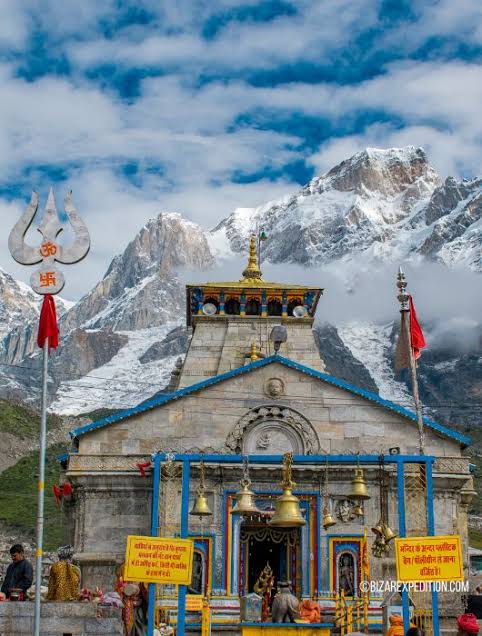
One of the Char Dhams and also part of the 108 Divya Desams of Vaishnavism. The temple sits on the banks of the Alaknanda River, flanked by the Nar and Narayan mountain ranges, with Neelkanth peak visible behind it.
- Deity
- Lord Vishnu (as Badrinarayan)
- Elevation
- 3,133 m
- District
- Chamoli
- Ideal Duration
- 1-2 days including Mana village
About Badrinath
Badrinath is the final and easternmost stop of the traditional Char Dham circuit, and the only one of the four fully connected by road right up to the temple gate.
The temple town sits at the base of Neelkanth peak, on the banks of the Alaknanda, and is flanked by the Nar and Narayan mountain ranges — believed in mythology to be manifestations of two sage-brothers.
Just beyond Badrinath lies Mana, often described as India's last village before the Tibet border, with sites linked to the sage Ved Vyasa and the Mahabharata.
Legend & Mythology
Legend holds that Lord Vishnu meditated here for ages, and Goddess Lakshmi shielded him from the harsh weather by turning into a badri (jujube/berry) tree — giving the site its name, Badrinath, or "lord of the berry tree." The idol is believed to have been rediscovered by Adi Shankaracharya in the 8th-9th century, having been hidden in the Narad Kund.
How to Reach
Fully motorable — temple town is well connected by road, about 300 km from Rishikesh via Joshimath.
Quick Facts
Trek Distance
None — fully motorable to the temple
Trek Difficulty
N/A; short walk from parking to temple steps
Nearest Railway
Rishikesh (~295 km)
Nearest Airport
Jolly Grant, Dehradun (~315 km)
Portal Open/Close
Akshaya Tritiya (Apr/May) to mid-Nov (dates fixed by temple committee)
Temple Architecture
Colorful conical-roofed shrine rebuilt multiple times after glacial/avalanche damage; current structure largely dates to Garhwal kings and later Jaipur-era renovation.
Rituals & Puja
- Pilgrims bathe in the Tapt Kund hot spring at the base of the temple steps before darshan
- Maha Abhishek, an elaborate ritual bathing of the deity, performed early each morning by the temple's head priest (Rawal)
- Evening aarti, typically the most crowded darshan slot of the day
Highlights
- Tapt Kund hot spring at the base of the temple steps
- Mana village, the last Indian village before the Tibet border
- Vyas Gufa and Bhim Pul near Mana
Nearby Attractions
Mana Village
Last village before the Tibet border, ~3 km from Badrinath
Vyas Gufa & Ganesh Gufa
Caves associated with the writing of the Mahabharata
Bhim Pul
Natural rock bridge over the Saraswati River near Mana
Neelkanth Peak Viewpoint
Views of the peak that towers behind the temple
Where to Stay
Badrinath town has hotels and GMVN guesthouses across budgets, adequate for an overnight stay. Joshimath, about 45 km away, is a common alternative base with more established infrastructure.
Weather
Being road-connected and slightly lower than Kedarnath, Badrinath is comparatively milder, though nights are still cold through the season and early/late-season snowfall can affect the Joshimath-Badrinath road.
Travel Tips
- Visit Mana village in the same trip — it's a short drive and adds meaningful context to the area's mythology
- Early morning darshan slots are less crowded than the evening aarti
- Road conditions between Joshimath and Badrinath can be affected by landslides; keep a buffer day in the itinerary
Other Dhams
Plan Your Badrinath Visit with GoTrek Travels
GoTrek Travels is a KMVN-approved operator based in Pithoragarh, Uttarakhand, offering guided Char Dham packages with transport, stay, and registration handled end to end.